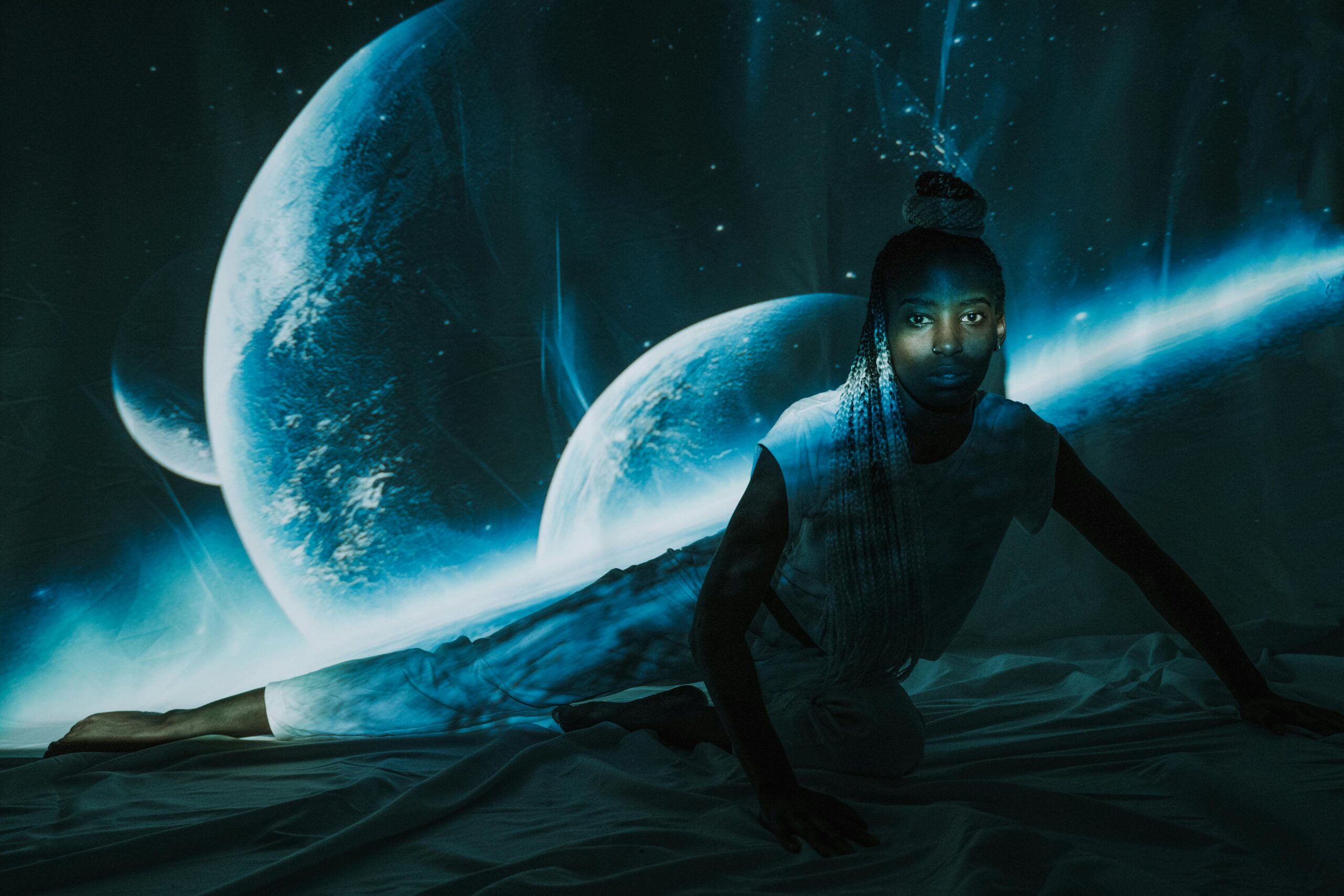
Cosmic rays bombard Earth constantly, invisible yet powerful particles that travel across the universe at nearly light speed, silently influencing life at the molecular level.

🌌 The Invisible Force Shaping Life on Earth
Every second, billions of cosmic rays pierce through our atmosphere, colliding with atoms and creating cascades of secondary particles that reach the planet’s surface. These high-energy particles, originating from supernovae, black holes, and distant galaxies, represent one of nature’s most fascinating phenomena. While we rarely think about them in our daily lives, cosmic rays play a significant role in biological processes, particularly in the realm of genetic mutations.
Scientists have long suspected that cosmic radiation contributes to the spontaneous mutations observed in all living organisms. However, quantifying this impact and understanding the mechanisms involved has proven to be one of biology’s most intriguing challenges. The relationship between cosmic rays and genetic mutation rates opens windows into evolutionary biology, space exploration risks, and even the origins of life itself.
What Are Cosmic Rays and Where Do They Come From?
Cosmic rays are not actually rays at all—they’re particles, primarily protons and atomic nuclei, accelerated to extraordinary velocities by some of the universe’s most violent events. When a massive star explodes in a supernova, it releases energy equivalent to the sun’s entire lifetime output in just a few weeks. These catastrophic events act as cosmic particle accelerators, propelling atomic nuclei across the galaxy.
The composition of cosmic rays reveals their exotic origins. Approximately 90% consist of hydrogen nuclei (protons), 9% are helium nuclei, and the remaining 1% includes heavier elements and even antimatter particles. Some cosmic rays carry energies millions of times greater than anything we can produce in terrestrial particle accelerators, making them natural laboratories for studying extreme physics.
Primary and Secondary Cosmic Radiation
When primary cosmic rays enter Earth’s atmosphere, they rarely reach the surface intact. Instead, they collide with atmospheric molecules, creating showers of secondary particles including muons, neutrons, electrons, and gamma rays. These secondary particles form a continuous rain of radiation that penetrates everything, including our bodies. Right now, as you read this, approximately one muon passes through every square centimeter of your body each minute.
Earth’s magnetic field and atmosphere provide substantial protection against cosmic radiation. The magnetic field deflects many charged particles, while the atmosphere absorbs much of the remaining radiation. However, this protection varies significantly with altitude and latitude. At sea level near the equator, cosmic ray intensity is relatively low, but at high altitudes and near the poles, exposure increases dramatically—a crucial consideration for airline crews and astronauts.
💉 How Cosmic Rays Interact with DNA
The journey from cosmic particle to genetic mutation involves complex biophysical processes. When a high-energy particle passes through living tissue, it ionizes atoms along its path, creating free radicals and breaking chemical bonds. DNA, despite its remarkable stability, remains vulnerable to this type of damage.
Cosmic rays can damage DNA through direct and indirect mechanisms. Direct damage occurs when a particle strikes the DNA molecule itself, potentially breaking the sugar-phosphate backbone or damaging nucleotide bases. Indirect damage happens more frequently, as cosmic rays ionize water molecules in cells, creating reactive oxygen species (ROS) that subsequently attack DNA.
The Cellular Response to Radiation Damage
Fortunately, cells possess sophisticated DNA repair mechanisms that fix most radiation-induced damage. The base excision repair pathway handles modified bases, while double-strand break repair systems address more severe damage. However, these repair systems aren’t perfect. Sometimes they make errors, introducing mutations that become permanent parts of the genome if they occur in reproductive cells.
Research indicates that the average human experiences approximately 10,000 to 100,000 DNA lesions per cell per day from various sources, including cosmic radiation. While repair mechanisms fix most of these, a small fraction escapes correction, contributing to the background mutation rate observed in all species.
⚗️ Quantifying the Cosmic Contribution to Mutation Rates
Determining exactly how much cosmic radiation contributes to genetic mutations presents significant scientific challenges. Researchers employ multiple approaches to estimate this contribution, including comparative studies across different altitudes, laboratory experiments with controlled radiation, and mathematical modeling of particle interactions.
Studies conducted at various elevations reveal that mutation rates do increase with altitude, consistent with greater cosmic ray exposure. Experiments with bacteria, plants, and animals exposed to cosmic radiation levels show measurable increases in mutation frequencies. However, isolating cosmic rays from other mutagenic factors remains difficult in natural settings.
Experimental Evidence from High-Altitude Studies
Mountain-dwelling organisms provide natural experiments in cosmic ray exposure. Researchers comparing genetic variation in populations living at different altitudes have found suggestive evidence that higher elevations correlate with increased genetic diversity, potentially driven by elevated mutation rates. Similarly, studies of microorganisms in the upper atmosphere show distinctive patterns of genetic variation consistent with increased radiation exposure.
Current estimates suggest that cosmic radiation accounts for approximately 10-15% of the natural background mutation rate in humans at sea level, though this percentage varies significantly with location and altitude. For comparison, other sources of mutations include errors during DNA replication, chemical mutagens from metabolism and the environment, and thermal fluctuations that cause spontaneous base changes.
🚀 Implications for Space Exploration
Beyond Earth’s protective atmosphere and magnetic field, cosmic radiation intensifies dramatically. Astronauts on the International Space Station receive radiation doses approximately 150 times higher than people on Earth’s surface. For missions to Mars or beyond, radiation exposure becomes one of the most serious health risks.
During a three-year Mars mission, astronauts would accumulate radiation exposure equivalent to receiving multiple whole-body CT scans weekly. This sustained exposure significantly increases cancer risk and could potentially cause cognitive impairment, cardiovascular problems, and accelerated aging. Understanding how cosmic rays induce mutations is therefore critical for developing countermeasures for long-duration space missions.
Protecting Future Space Explorers
Space agencies worldwide are developing strategies to mitigate cosmic radiation risks. Physical shielding using water, polyethylene, or regolith can reduce exposure, though perfect protection remains impractical given mass constraints. Pharmaceutical interventions, including antioxidants and DNA repair enhancers, show promise in laboratory studies. Some researchers even propose using genetic engineering to enhance radiation resistance in space travelers, though this raises complex ethical questions.
Understanding cosmic ray-induced mutations also informs the search for extraterrestrial life. Any life forms on Mars or other worlds without protective magnetic fields and atmospheres would need robust DNA repair mechanisms or alternative genetic systems to survive the intense radiation environment.
🧬 Evolutionary Perspectives on Cosmic Radiation
From an evolutionary standpoint, cosmic rays represent both a challenge and an opportunity. Mutations caused by cosmic radiation are overwhelmingly harmful or neutral, but occasionally they produce beneficial variations that natural selection can favor. Over geological timescales, cosmic radiation may have contributed significantly to the genetic diversity that enables adaptation and evolution.
Some scientists speculate that variations in cosmic ray intensity, caused by the solar system’s movement through different galactic regions or nearby supernovae, might have influenced evolutionary rates throughout Earth’s history. Mass extinctions and evolutionary radiations could potentially correlate with periods of enhanced cosmic radiation, though establishing such connections remains highly speculative.
The Mutagenic Environment of Early Earth
Early in Earth’s history, before the ozone layer formed and when the magnetic field may have been weaker, cosmic radiation likely played a larger role in generating mutations. This higher mutation rate could have accelerated early evolution, helping life adapt to rapidly changing environmental conditions. Some researchers argue that cosmic radiation might even have contributed to the origin of life by driving prebiotic chemistry and creating the first self-replicating molecules.
📊 Modern Research Techniques and Discoveries
Contemporary science employs sophisticated tools to study cosmic ray-induced mutations. Whole-genome sequencing allows researchers to identify mutation signatures characteristic of different mutagenic processes. Advanced particle detectors precisely measure cosmic ray fluxes and their biological effects. Computer simulations model particle trajectories through tissue and predict DNA damage patterns.
Recent studies using these technologies have revealed unexpected complexity in how cosmic rays affect genomes. Different types of cosmic ray particles produce distinct mutation patterns. High-energy protons tend to cause point mutations and small deletions, while heavier nuclei can produce clustered damage and larger chromosomal rearrangements.
Breakthrough Findings in Radiation Biology
One surprising discovery involves the bystander effect, where cells not directly hit by radiation exhibit increased mutation rates due to signals from damaged neighboring cells. This phenomenon suggests cosmic ray impacts have broader effects than previously thought, potentially amplifying their mutagenic influence.
Another important finding concerns adaptive responses to low-dose radiation. Some organisms show improved DNA repair efficiency after exposure to low radiation levels, potentially reducing subsequent mutation rates. Understanding these protective mechanisms could lead to strategies for enhancing radiation resistance in humans.
🌍 Cosmic Rays and Climate Connections
Intriguingly, cosmic rays may influence Earth’s climate through cloud formation mechanisms, creating an indirect pathway by which they affect life. The hypothesis suggests that cosmic rays enhance aerosol formation in the atmosphere, affecting cloud cover and potentially global temperatures. While controversial and not fully proven, this connection implies cosmic radiation could influence mutation rates indirectly by altering environmental conditions.
Climate fluctuations driven partly by cosmic ray variations might create selective pressures that interact with mutation rates, producing complex evolutionary dynamics. For instance, if cosmic rays increase both mutation rates and environmental stress simultaneously, they could accelerate adaptation during challenging periods.
🔬 Practical Applications and Future Directions
Understanding cosmic ray-induced mutations has practical implications beyond space exploration. Radiation therapy for cancer relies on similar mechanisms, and insights into how cosmic rays damage DNA inform treatment optimization. Agricultural scientists use controlled radiation to induce beneficial mutations in crops, a technique called mutation breeding that has produced numerous improved varieties.
The electronics industry also cares deeply about cosmic rays, as they can cause “soft errors” in computer memory and microprocessors. Understanding how particles interact with matter at the atomic level helps engineers design radiation-hardened electronics for critical applications.
Emerging Technologies for Mutation Detection
New technologies promise to revolutionize our understanding of cosmic radiation effects. Single-cell sequencing can reveal mutation patterns in individual cells, showing how cosmic ray damage distributes across tissues. Advanced biosensors might soon enable real-time monitoring of DNA damage and repair in living organisms, providing unprecedented insights into mutagenic processes.
Artificial intelligence and machine learning are being applied to predict mutation hotspots and understand how cosmic rays interact with chromatin structure and DNA accessibility. These computational approaches complement experimental work, helping researchers make sense of vast datasets and generate testable hypotheses.
🌟 The Cosmic Context of Life’s Blueprint
Cosmic rays remind us that life on Earth exists within a broader cosmic context. The same stellar processes that create the elements necessary for life also generate radiation that shapes genetic evolution. We are, quite literally, children of the stars—not only because our atoms were forged in stellar furnaces, but also because cosmic particles continuously rewrite our genetic code in subtle ways.
This perspective challenges us to think about biology not merely as an earthbound phenomenon but as part of the universe’s grand narrative. The mutations that drive evolution, that cause diseases, and that make each individual unique partly originate in events occurring light-years away and millions of years in the past.
As we venture beyond Earth’s protective cocoon, understanding cosmic ray-induced mutations becomes not just scientifically interesting but essential for humanity’s long-term survival. Whether we can adapt to the radiation environment of deep space—either through technology, genetic enhancement, or natural selection—may determine whether we remain confined to one planet or become a truly spacefaring species.
🔭 Mysteries Yet to Unlock
Despite decades of research, many questions about cosmic rays and mutations remain unanswered. We still don’t fully understand the contribution of ultra-high-energy cosmic rays, those rare particles with energies exceeding anything observable in laboratory settings. Do these exceptionally powerful particles produce unique types of mutations? How do they penetrate and damage biological systems differently from lower-energy radiation?
The role of cosmic radiation in shaping the tree of life remains largely speculative. Could variations in cosmic ray exposure across Earth’s surface contribute to biodiversity patterns? Might cosmic ray hotspots act as evolutionary accelerators, generating genetic variation that fuels adaptation? These fascinating questions await future investigators.
Furthermore, the possibility that cosmic rays influenced the emergence of life itself invites continued exploration. If radiation-driven chemistry contributed to the origin of self-replicating molecules, recreating these conditions in laboratory settings might reveal pathways to life’s beginnings—with profound implications for understanding how common or rare life might be in the universe.
As our detection capabilities improve and our understanding of genetics deepens, we edge closer to fully unlocking the mysteries of how cosmic rays shape the fundamental code of life. This knowledge connects disciplines from astrophysics to molecular biology, reminding us that science’s greatest insights often emerge at the intersection of seemingly disparate fields. The invisible particles raining down from space carry stories written in supernovae billions of years ago, stories that continue to be told in every mutation, every adaptation, and every evolutionary innovation occurring on our planet today.